Bedding • Materials & Design
How Naturepedic Organic Linen Sheets Bring Ease to a Contemporary Bedroom
A bed can feel considered without looking overworked. With their relaxed surface, breathable structure, and quiet connection to natural materials, organic linen sheets offer a way to bring softness and ease into a contemporary bedroom.
Published November 2, 2026
Contemporary bedrooms are often shaped by restraint: fewer decorative layers, clearer lines, and materials chosen for how they feel as much as how they look. Linen suits that sensibility. Its texture is visible but not fussy, its drape is relaxed rather than rigid, and its character tends to become more familiar with use. In a room designed to feel calm and lived-in, that quality can matter as much as a carefully selected paint color or a well-proportioned bed frame.
Naturepedic organic linen sheets bring those qualities into the most immediate part of the room: the sleep surface. The sheets are described as woven from certified organic flax and finished to feel softer over time. Their natural texture is not the glossy smoothness associated with some sateen fabrics. It is more tactile, with a dry, softly rumpled hand that gives a bed a sense of ease without requiring elaborate styling.
Linen is not a universal preference, and it does not need to be. Some sleepers want a crisp, tightly woven sheet; others prefer a smooth, fluid surface. The appeal of linen lies in a different balance—air circulation, moisture management, durability, and a distinctive, relaxed appearance. Understanding those qualities helps clarify whether the fabric belongs in a particular bedroom, and what to expect once it is there.
Why linen feels at home in contemporary interiors
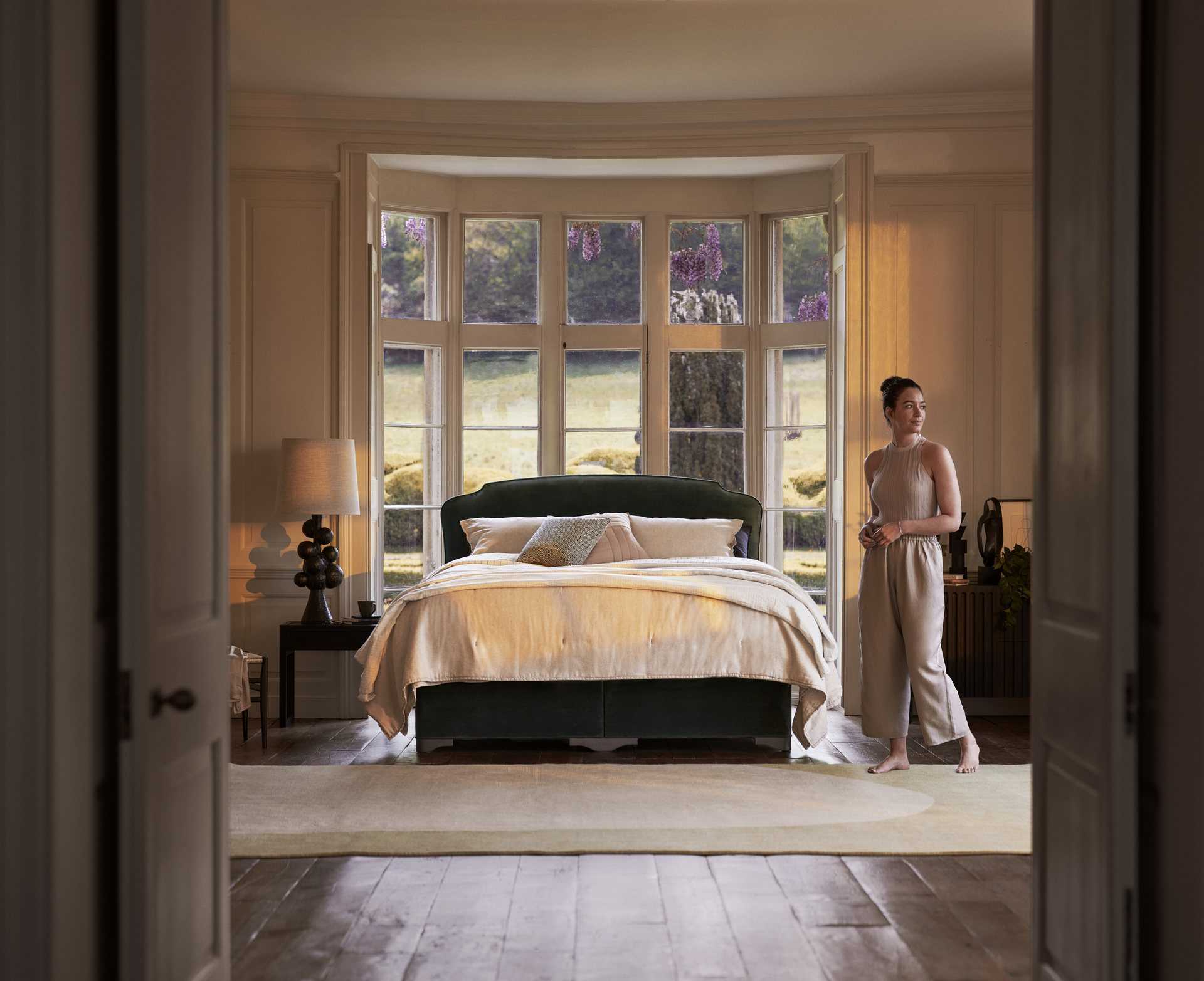
Modern bedroom design is often described in terms of minimalism, but a room stripped of every trace of texture can feel impersonal. Linen supplies visual depth without introducing a strong pattern or sheen. Its natural irregularities catch light gently, while its folds and creases make a bed look inviting rather than formally arranged. The result can be especially effective in rooms with clean-lined furniture, plain walls, and a limited palette.
That relaxed finish is not a sign of poor upkeep. Linen naturally creases, and many people value that quality as part of its character. It can soften a precise room, balancing the straight edges of a platform bed or a streamlined nightstand. In a more layered interior, it can sit comfortably alongside wool, cotton, wood, or a quilted coverlet without competing for attention.
Color also plays a part. Linen’s texture gives simple shades a little more dimension: white can feel warm rather than stark, while sand, grey, or muted green can add depth without dominating the room. Neutral bedding is not the only option, of course, but the understated surface of linen makes it a useful foundation when the aim is a bedroom that feels composed rather than decorated all at once.
There is a practical benefit to this quiet appearance. A bed made with linen does not depend on sharp creases or perfectly aligned layers to look finished. A duvet cover can fall naturally over the bed, and pillowcases can retain a softly lived-in quality. For people who want a welcoming room but do not want to spend time achieving a formal hotel-style finish every morning, this ease can be part of the attraction.
The feel: textured, breathable, and less polished
Linen’s first impression can differ from that of smooth cotton. It may feel slightly textured or substantial, particularly when new, rather than instantly silky. Washing and regular use can soften the fibers, but linen generally keeps a recognizable surface. That balance—softening without losing all its character—is one reason people choose it. The fabric does not have to feel perfectly uniform to become comfortable.
The Naturepedic organic linen sheets are described as stone-washed, a finishing process that gives the fabric a softer, more relaxed feel. They are also listed at 185 grams per square meter. Fabric weight is useful context, but it does not tell the whole story: weave, finishing, fiber quality, and personal preference all affect how a sheet feels. A number on its own cannot guarantee that a fabric will feel light, heavy, crisp, or soft to every sleeper.
Linen’s construction is often associated with airflow and moisture movement. Flax fibers and the way linen is woven can allow air to circulate, while the fabric can absorb moisture and release it again. For sleepers who find dense or heat-retaining bedding uncomfortable, those properties may be appealing. They do not make linen a climate-control system, however. Room temperature, mattress materials, sleepwear, duvet weight, and individual physiology all shape the experience of warmth at night.
Nor does “breathable” mean that every linen sheet will feel cool in every setting. A heavy duvet, a warm room, or a high-humidity climate can still affect comfort. The useful point is more measured: linen is a material worth considering for people who want a naturally textured sheet with good air movement and moisture-management characteristics. Personal experience remains the best test of whether its hand and weight suit a particular sleeper.
Comfort across changing seasons
Seasonal bedding is often treated as a question of swapping one set for another. Linen can make that rotation less strict. Its airy feel may be welcome during warmer months, while its weight and texture can still feel comforting when temperatures fall. The exact effect depends on the sheet, the layers above it, and the room, but linen’s adaptability is part of its appeal as an everyday material.
In summer, a breathable sheet can help the sleep surface feel less close and humid. In cooler weather, linen can pair with a warmer duvet or blanket, adding texture without necessarily creating a heavy, sealed-in sensation. This makes it a flexible foundation for people who like to adjust the bed through layering rather than changing every component with the calendar.
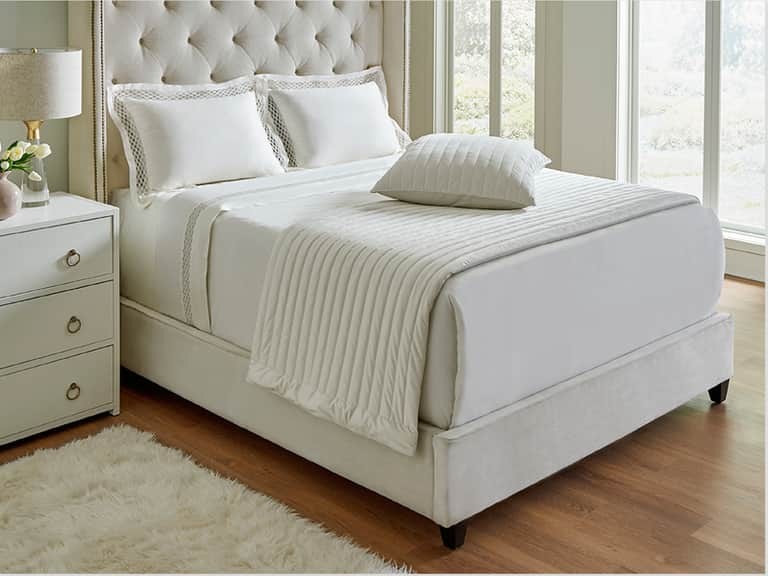
Layering is also a design tool. A linen sheet set can work beneath a cotton duvet cover, a lightweight quilt, or a heavier coverlet. Each layer brings its own surface and weight. Keeping the palette restrained allows those differences to register: a softly rumpled sheet, a smoother duvet, and a more structured coverlet can create a bed that feels considered without being visually busy.
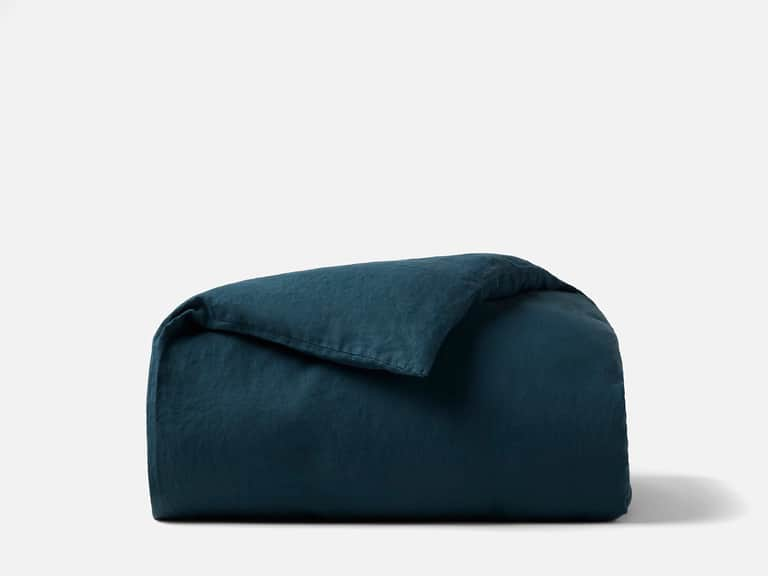
For a coordinated arrangement, Naturepedic’s organic linen sheets are presented in shades including Arctic Snow, Beige, Harbor Island, and Forest Canopy. These colors can be used as a quiet base for patterned cushions or a contrasting blanket, or simply left to establish a tonal, low-key scheme. When selecting a shade, consider not only the wall and furniture colors but also how daylight changes the room over the course of the day.
Organic certification and what it can tell you
“Organic” is meaningful when it is backed by a clear standard and verifiable certification. The Naturepedic sheets are described as made from GOTS-certified organic flax. The Global Organic Textile Standard, commonly known as GOTS, sets requirements for the processing of organic fibers and includes environmental and social criteria across relevant stages of textile production. Certification can offer a more structured basis for evaluating a textile than broad, unsupported claims alone.
Certification is not a promise that a product will feel a particular way, last for a particular number of years, or suit every household. It is also not a substitute for checking the details of the item being considered. Useful questions include what material is certified, which standard applies, whether the certification covers the finished textile or only an earlier stage, and whether the product information identifies where the material was grown and where it was made.
For these sheets, the supplied product details identify the flax as grown in France and the sheets as made in India in a GOTS-certified organic facility. That information helps describe the production chain, though sourcing and manufacturing details should be read as product-specific information rather than assumptions about all linen. Asking where a fiber originates and how it is processed can make an “organic” claim easier to understand in context.
Organic certification and comfort are related only indirectly. A sleeper may choose certified organic materials because of environmental or production considerations, while choosing the sheet itself for its texture and breathability. Keeping those questions distinct makes for a more informed decision: certification addresses standards and production claims; comfort is something to assess through construction, care information, and personal preference.
Care that helps linen age well
Good care need not be complicated, but it should follow the manufacturer’s instructions. Naturepedic’s listed care guidance for these sheets is to machine wash warm, tumble dry on low, warm iron if desired, and avoid bleach. That is a practical starting point. Care labels and current product instructions should take precedence, since recommendations can vary by color, finish, or later product revisions.
Use a detergent suited to the fabric and avoid overloading the washing machine. Bedding needs room to move through the wash rather than being packed tightly into the drum. A gentle routine can reduce unnecessary friction, while low-heat drying helps avoid excess heat exposure. Removing sheets promptly when the cycle ends can limit deep creasing; ironing is optional, not a requirement for linen to look presentable.
The fabric’s natural creases are part of its appearance, so there is little reason to pursue a perfectly pressed finish unless that is the look you prefer. If ironing is desired, the listed instructions allow a warm iron. A slightly damp fabric may be easier to smooth, but follow the care guidance for the specific set and avoid assuming that every linen blend or finish responds the same way.
Washing frequency is a personal and household matter, influenced by climate, pets, allergies, skin sensitivities, and individual preference. A regular routine can help keep sheets fresh, while rotating between sets gives each one time to air and reduces wear from constant laundering. Store clean linen in a dry, ventilated place, and make sure it is fully dry before putting it away.
Fit, dimensions, and the details worth checking
A beautiful fabric can be frustrating if it does not fit the mattress or pillow. Before choosing a sheet set, check mattress dimensions, depth, and any topper that changes the overall height. The supplied Naturepedic information lists a 15-inch pocket on the fitted sheet. Mattress depth varies, and a topper can add several inches, so measuring the complete sleep surface is more reliable than relying on the mattress size printed on a label alone.
The listed set includes a flat sheet, a fitted sheet, and two pillowcases. Available sizes are Queen, King, and California King. Pillowcase dimensions are given as 20 by 32 inches for Standard/Queen and 20 by 40 inches for King. Since pillow sizes and naming conventions can differ, checking measurements before purchase helps avoid a loose or overly tight fit.
Also consider how the sheets will coordinate with existing bedding. A fitted sheet needs to match the mattress; pillowcases should suit the pillows; and the flat sheet should be large enough for the desired tuck and drape. These details are less evocative than fiber stories or color names, but they determine whether a set works smoothly in daily use.
How to decide whether linen is right for your room
Start with the experience you want, not with a thread-count comparison. If you prefer a silky, glossy surface, cotton sateen may feel more familiar. If you enjoy a crisp, matte hand and a more structured finish, percale may be a better match. Linen occupies a different place: tactile, relaxed, and naturally irregular. Sampling the fabric, where possible, can help set expectations before committing to a full set.
Then consider your climate and sleeping habits. People who tend to sleep warm may appreciate linen’s airflow and moisture-management qualities, though no fabric can guarantee a cooler night. Those who like a smooth, close-fitting sheet might take longer to adapt to linen’s texture. A gradual approach—starting with pillowcases or a single layer, if available—can help determine whether the material feels right in everyday use.
Finally, look at the room as a whole. Linen works especially well when its relaxed surface balances other elements: crisp architecture, polished wood, a restrained color palette, or a more formal bed frame. It can make a bedroom feel less staged, while still appearing intentional. The goal is not to make the bed look untouched; it is to create a room that supports rest and feels natural to inhabit.
A quieter kind of luxury
Luxury in bedding is not simply a matter of high thread counts or a gleaming finish. It can also mean a fabric that feels pleasant against the skin, suits the room’s climate, fits the mattress properly, and remains appealing after repeated use. Linen’s particular luxury is understated. It asks for less visual perfection and offers, in return, a texture that feels grounded and a look that does not depend on constant rearrangement.
Naturepedic organic linen sheets bring together certified organic flax, a stone-washed finish, and a fabric weight of 185 grams per square meter. Their stated care instructions are straightforward, and the listed construction details—15-inch fitted-sheet pockets and a set with flat sheet, fitted sheet, and pillowcases—offer practical points to check before choosing a size. Their case is not that linen is universally superior, but that it offers a distinctive balance of relaxed texture and breathable comfort.
For a contemporary bedroom, that balance can be enough. A bed can feel composed without being rigid, and the room can feel refined without appearing too precious to use. Linen’s creases, softening surface, and quiet drape make space for a more ordinary kind of elegance: one that becomes part of daily life rather than a display reserved for special occasions.
Frequently asked questions
Do linen sheets get softer with washing?
Linen commonly softens through washing and use, while retaining much of its characteristic texture. The pace and degree of change depend on the fiber, weave, finish, and care routine. Follow the product’s instructions rather than using harsh treatments to accelerate softening.
Are organic linen sheets suitable for every season?
They can be used throughout the year, particularly when paired with layers suited to the room and season. Linen’s breathability and moisture-management qualities make it a material many sleepers consider for changing temperatures, but warmth also depends on the duvet, blanket, room conditions, and personal preference.
Will linen sheets look wrinkled?
Yes, linen naturally creases. Many people see the relaxed finish as part of its appeal. A warm iron is listed as an option for the Naturepedic sheets, but ironing is not necessary if you prefer linen’s naturally rumpled appearance.
What should I check before choosing a set?
Check the mattress dimensions and depth, including any topper; confirm the fitted-sheet pocket; compare pillowcase measurements with your pillows; review the care instructions; and verify the certification and material details that matter to you. These practical checks help ensure that the sheets suit both the bed and the household.
In brief: Naturepedic organic linen sheets offer a relaxed visual character, a textured feel that can soften with washing, and breathable properties associated with linen. Their value in a contemporary bedroom is as much about everyday ease as appearance: a natural material, considered care, and a bed that looks welcoming without needing to look perfectly pressed.