Bedding guide
Memory Foam Pillows: How to Choose the Right Loft and Feel
A pillow can feel soft in the hand and still hold the head too high. Another may seem firm at first, then settle into a comfortable cradle. With memory foam, the difference often comes down to loft, construction, and how the material responds to your body—not a label on the package.
Published November 18, 2026
Memory foam has a particular talent: it yields under pressure, then gradually recovers its shape. That close contour can make a pillow feel more like a fitted support than a loose mound of filling. For some sleepers, that sensation is reassuring. For others, it feels too warm, too slow to respond, or simply unlike the familiar give of down or fiberfill.
There is no single “best” memory foam pillow. The right one depends on the distance between your head and mattress, your usual sleeping position, the mattress’s own give, and whether you prefer a steady molded surface or a pillow you can reshape. Understanding those variables turns a confusing set of firmness claims into a practical decision.
This guide explains pillow loft, foam construction, responsiveness, ventilation, and care. It is intended as general bedding information, not medical advice. Persistent pain, numbness, or other concerning symptoms merit guidance from a qualified health professional.
Start with loft, not the word “firm”
Loft is the pillow’s height, usually considered when it is resting without weight on it. In use, a pillow compresses, so its effective height is lower than its unoccupied measurement. That distinction matters: a lofty pillow made from compressible foam may settle substantially, while a lower, denser pillow may keep more of its height under the head.
Firmness describes resistance to compression. Loft describes height. They influence one another, but they are not interchangeable. A high-loft pillow can be soft; a low-profile pillow can feel quite firm. Product descriptions sometimes blur these terms, so look for construction details, dimensions, and whether the fill is molded or adjustable when comparing options.
The aim is a comfortable, reasonably neutral position for the head and neck. A pillow that is too tall can angle the head upward; one that is too low may let it fall back toward the mattress. The ideal position varies with body shape, shoulder width, mattress softness, and how much a sleeper moves overnight. A pillow should not be chosen by sleeping position alone, but position is a useful first clue.
How sleeping position can guide the choice
Side sleeping
Side sleepers often need enough loft to fill the space between the outer shoulder and the head. The required height depends on shoulder width and how deeply the shoulder sinks into the mattress. A plush mattress may allow the shoulder to settle farther in, reducing the gap; a firmer surface may leave more distance to bridge.
A pillow that collapses too readily can lose support as the night goes on. Conversely, one that remains too tall may push the head away from a comfortable line. Consider a medium-to-higher profile as a starting point, not a rule, and pay attention to how the pillow behaves under your actual weight.
Back sleeping
Back sleepers commonly look for a moderate loft that supports the natural curve at the neck without lifting the chin toward the chest. Some memory foam pillows have a shallow center and raised edges, intended to cradle the head while supporting the neck. That contour suits some people and feels restrictive to others. The shape should feel natural when lying down, not like a ridge is forcing the head into place.
Stomach sleeping
Stomach sleeping generally places the neck in a rotated position. A lower, softer pillow—or no pillow beneath the head—may feel more comfortable for some people than a tall, dense one. Memory foam’s resistance can make a high-profile pillow feel especially imposing in this position. If you sleep on your stomach, prioritize a low profile and assess whether the pillow lets your head rest without feeling pushed upward.
Combination sleeping
People who change positions need a pillow that works across more than one posture. A fixed molded contour may provide consistent support but can be awkward when turning. Shredded foam is often easier to shift and shape, although it can move during the night. Consider which position you spend the most time in and whether you prefer stable support or freedom to rearrange the fill.
Molded foam or shredded fill?
Memory foam pillows are not all made from one solid block. Their construction changes how they feel, how much they can be adjusted, and how they respond to movement.
Molded or solid-core pillows
A molded pillow uses a shaped piece of foam, sometimes with a contoured profile. It offers a relatively consistent surface: the foam does not shift from one side to another, and its shape is predictable. This can appeal to sleepers who want a defined cradle and do not want to fluff or redistribute filling.
The trade-off is flexibility. If the loft or curve is wrong for your body, there may be little opportunity to change it. Some solid-core designs are also heavier and can feel less responsive when you turn. Look for the pillow’s dimensions and profile, and check whether the foam is ventilated or layered rather than assuming all molded pillows feel alike.
Shredded memory foam
Shredded foam consists of smaller pieces contained inside a fabric shell. The fill can usually be shifted, fluffed, or removed if the design allows it. That adjustability can be helpful when a sleeper is uncertain about loft or wants to fine-tune the shape around the head and neck.
Shredded pillows may feel more yielding than a solid block, but the experience depends on the amount and type of fill. Too much can make the pillow bulky; too little may leave it flat or uneven. Fill can also migrate, so periodic reshaping may be part of everyday use. Check whether the pillow’s inner construction permits adding or removing foam and whether replacement fill is available.
Hybrid designs
Some pillows combine a shaped foam core with a softer outer layer, or pair foam with other fibers. These designs aim to blend contouring with a more cushioned surface. The details matter: a plush cover does not necessarily alter the support of a firm core, and a soft outer layer may compress quickly. Assess the whole construction rather than treating a hybrid label as a guarantee of a particular feel.
Density, firmness, and responsiveness
Density refers to how much foam material is packed into a given volume. It can influence weight, durability, and the sensation of support, but it is not a universal firmness scale. A denser foam is not automatically better, nor does density alone tell you whether a pillow will suit your sleep position. Manufacturers may use different formulations, so comparisons across brands can be imperfect.
Responsiveness describes how quickly foam adjusts when pressure shifts. Traditional memory foam is known for a slower, contouring response: it compresses where the head rests and takes time to recover. Some newer formulations respond more quickly, while shredded construction can move more readily because the pieces can shift independently. If you turn frequently, a pillow that rebounds faster may feel easier to move across.
Firmness ratings can be useful as a rough guide within one maker’s range, but they are subjective. A “medium” pillow may feel quite different depending on foam density, temperature, cover fabric, and the sleeper’s weight. Treat ratings as one clue among several. If possible, review the return or trial policy before buying, since a brief hand-press test cannot reproduce a full night of use.
Temperature and ventilation deserve attention
Close contouring means more of the pillow may touch the head and face, and some sleepers find memory foam warmer than more open, loose fills. Heat perception is personal and can also be affected by room temperature, bedding layers, humidity, and individual sleep habits. No material can promise a cool night for every person.
Construction can make a difference. Perforations, channels, layered foam, or shredded fill may create pathways for air movement, though their real-world effect varies. Covers also matter: a removable, breathable cover can be easier to wash and may feel less insulating than a thick, quilted casing. Read the specifications carefully and distinguish a cooling fabric treatment from a feature that changes the pillow’s underlying ventilation.
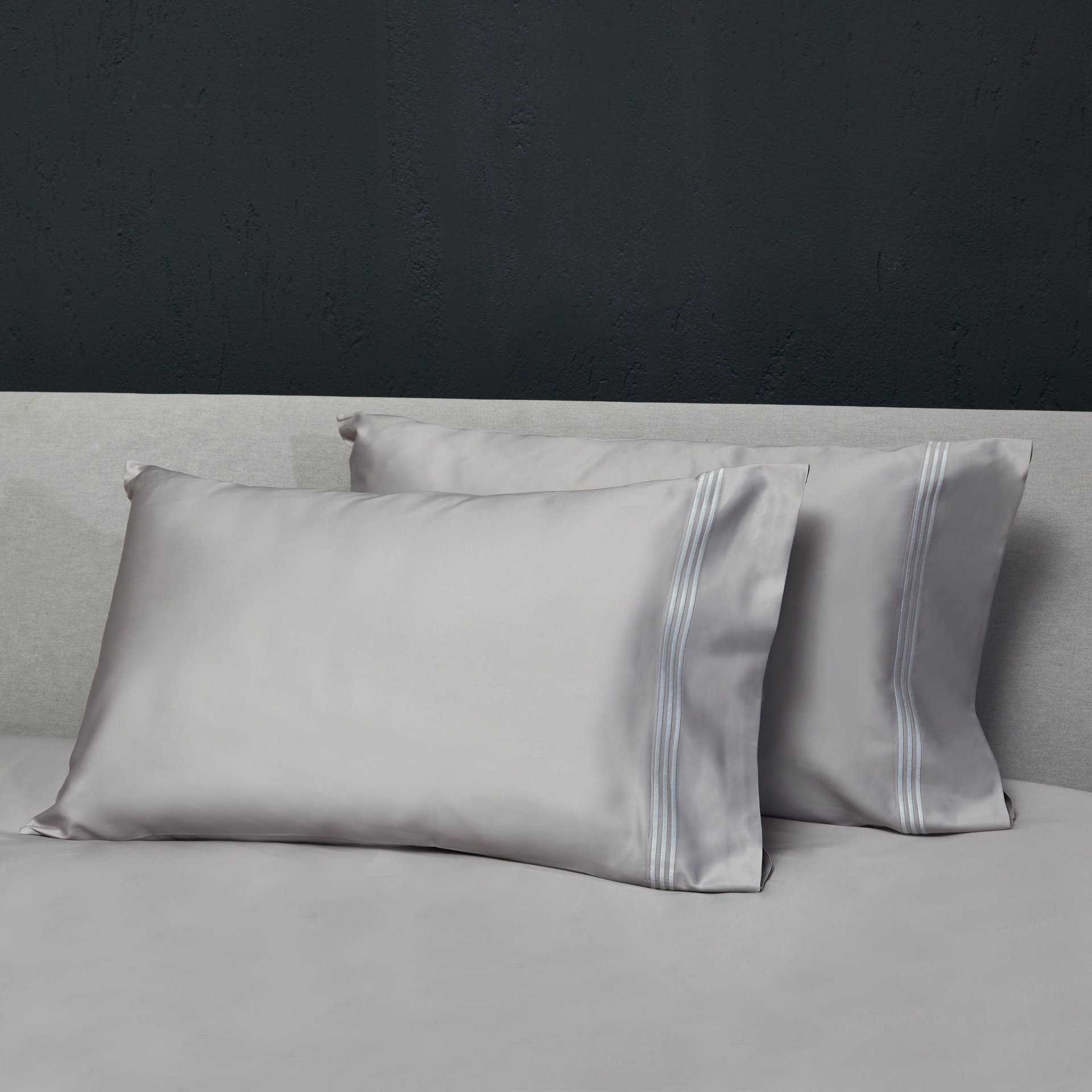
Sheets and pillowcases contribute to the immediate surface feel. A smooth cotton sateen pillowcase, for example, offers a different hand than crisp cotton percale or linen. The case does not change the foam’s loft, but it can affect how the pillow feels against the skin and how easily the head moves across it.
Care: read the label before washing
Memory foam is not automatically machine washable. Many solid foam cores can be damaged by full immersion, aggressive agitation, or high heat. Follow the manufacturer’s instructions rather than applying general pillow-washing advice. If the cover is removable, wash it separately according to its care label and make sure it is completely dry before replacing it.
For a non-removable cover or a foam surface, spot cleaning may be the permitted method. Use only the approach specified by the maker, avoid soaking the core, and allow any treated area to dry thoroughly in a well-ventilated place. Do not use direct high heat unless the care instructions explicitly allow it. Foam that remains damp can develop an unpleasant odor or deteriorate.
A washable pillowcase is a useful first line of protection against everyday oils and dust. Airing the pillow in a dry, well-ventilated room may help it feel fresher between cleanings, provided the care guidance permits it. Avoid direct sunlight or heat if the manufacturer warns that exposure could damage the foam. A removable inner liner, where present, has its own care requirements too.
A practical fit check
When testing a pillow, give it time to settle. Lie in your usual position on the mattress you sleep on, rather than testing it upright in a store or on a different bed. Let the foam respond, then notice whether the height feels comfortable and whether you can relax without repeatedly adjusting your head.
- Check the loft in context. The same pillow can feel different on a firm mattress and a soft one because the shoulder and torso settle differently.
- Notice pressure and alignment. Ask whether the head feels lifted, dropped, or comfortably supported. Do not force yourself to stay in a position that feels strained.
- Try turning over. If you shift at night, see whether the pillow lets you move naturally or seems to hold you in one place.
- Consider adjustment. For an adjustable-fill design, make small changes and retest rather than removing a large amount of fill at once.
- Read return terms. A pillow is a personal fit. Understand any hygiene restrictions, trial period, or return costs before opening or using it.
A useful trial is not a contest in which the pillow must feel instantly perfect. Foam may respond differently after it has warmed under body heat, and a new shape can take some getting used to. Still, persistent discomfort is not a requirement for adaptation. If the pillow repeatedly feels too high, too low, or difficult to move on, that is relevant information.
Common mistakes when comparing memory foam pillows
Choosing by firmness alone. A firm pillow may compress less, but its loft and contour still determine where the head rests. Compare construction and dimensions, not just a single rating.
Assuming more loft means more support. Height that exceeds the space your body needs can be uncomfortable. The goal is an appropriate fit, not the tallest pillow available.
Ignoring the mattress. A mattress that lets the shoulder sink may change the required pillow height. Pillow and mattress work as a system, even though they are purchased separately.
Confusing “cooling” claims with guarantees. Ventilation features can affect airflow, but room conditions and personal comfort matter. Treat product language as a description to verify, not a promise that applies to everyone.
Overlooking cleaning instructions. A pillow that cannot be washed like ordinary bedding may still be manageable, but its care routine should suit your household. Check how the cover and core are cleaned before purchase.
The right pillow is a fit, not a verdict
Memory foam’s appeal lies in its ability to contour, but contouring is not the same as comfort for every sleeper. A well-chosen pillow balances height, compression, and responsiveness with the way you sleep and the feel you prefer. Molded foam offers a defined, steady shape; shredded fill offers more room to adjust. Ventilation and care instructions help determine whether the pillow will be pleasant to live with beyond the first night.
Begin with your sleep position, then account for your mattress and shoulder-to-head distance. Compare loft and construction, and treat firmness labels as estimates rather than guarantees. Finally, use the pillow in the setting where it will actually be used. The best choice is not the one with the most persuasive specification or the boldest claim. It is the one that supports a comfortable night without demanding attention.
Quick checklist
- Match pillow loft to your sleeping position, body shape, and mattress feel.
- Distinguish height from firmness and compare the pillow’s construction.
- Choose molded foam for a consistent shape or adjustable shredded fill for more flexibility.
- Consider response speed if you change positions frequently.
- Review ventilation details, cover materials, and the complete care label.
- Check the trial and return policy so you can assess comfort under real sleeping conditions.